How Latin American brands can start selling on Amazon US: a practical roadmap
Many Latin American brands look at Amazon US and see a huge market one account away. The account is the easy part. What decides whether the channel works is the order in which you make a handful of decisions, and how honest the numbers are before the first unit ships.
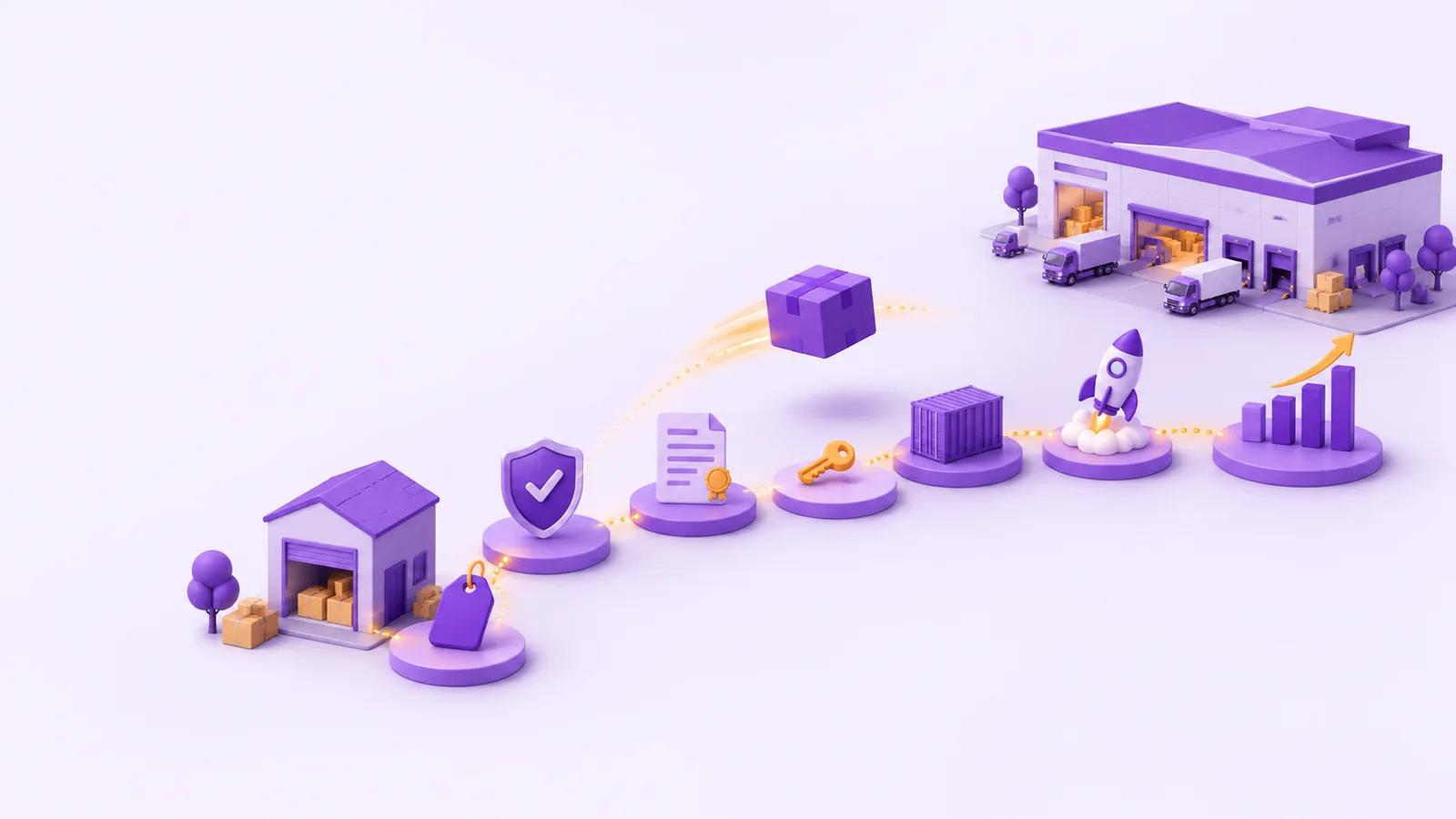
This is the sequence we use with brands entering the US from Latin America.
The account is a formality. The decision that matters is which products still make money after fees, freight and duties.
1. Choose products by unit economics, not by what sells at home
A product that does well in your country can lose money in the US once you add everything between your warehouse and the customer. For each candidate product, build a simple landed-cost sheet:
- Product cost and packaging.
- International freight, insurance, duties and customs brokerage.
- Prep and inbound costs to get the product into Amazon's network or to your US warehouse.
- Amazon's referral fee, which varies by category, and fulfillment fees if you use FBA.
- A realistic advertising budget per unit for the first months.
If the margin after all of that does not leave room for advertising and returns, the product is not a launch product. Start with the two or three items where the math is clearly positive.
2. Check compliance before you design anything
Some categories need more than a listing. Food, supplements, cosmetics, children's products and electronics have specific US requirements, from FDA obligations to safety testing and labeling rules. Labels must be in English, and you will need product barcodes (GTINs). Confirm requirements for your category with a qualified advisor before printing packaging or shipping inventory. Fixing a label at a US warehouse is far more expensive than fixing it in a design file.
3. Protect the brand
Amazon Brand Registry gives you more control over your listings and access to brand tools. It requires a trademark that is registered or pending in an eligible country, and for the US market that usually means a USPTO application. Start the trademark process early; it takes time and it shapes what you can do on the channel.
4. Open the account carefully
Seller Central asks for identity documents, a bank account that can receive payouts and tax information. The details have to match across documents. A mismatch in a name or address can stall verification for weeks, and repeated failed attempts make it harder. Gather everything first and make sure it is consistent.
5. Decide how the product gets to the customer
You can send inventory to Amazon's fulfillment network (FBA), ship orders yourself (FBM) or use a US prep center that receives your imports and forwards stock to Amazon in smaller batches. Each option changes your costs, your cash cycle and your exposure to storage fees. For most brands shipping from Latin America, the importer of record, the customs broker and the prep center are decided together.
6. Launch a few products well
A focused launch beats a full catalog uploaded at once. Write listings for US shoppers, not translated from Spanish. Plan how you will earn your first reviews within Amazon's rules. Set an advertising budget with a clear end date for the launch phase, and decide in advance what result would make you scale, adjust or stop.
7. Measure from day one
Track sessions, conversion rate, sell-through, days of inventory and contribution margin per product every week. These numbers tell you when to reorder, when to raise or cut ad spend and which product deserves the next investment.
The short version
Products by unit economics, compliance before design, trademark early, a clean account, a logistics model that fits your cash, a focused launch and weekly numbers. Skipping a step rarely saves time; it usually moves the cost to a worse moment.
If you are planning this move, we can review your catalog and costs and tell you which products to start with and why.